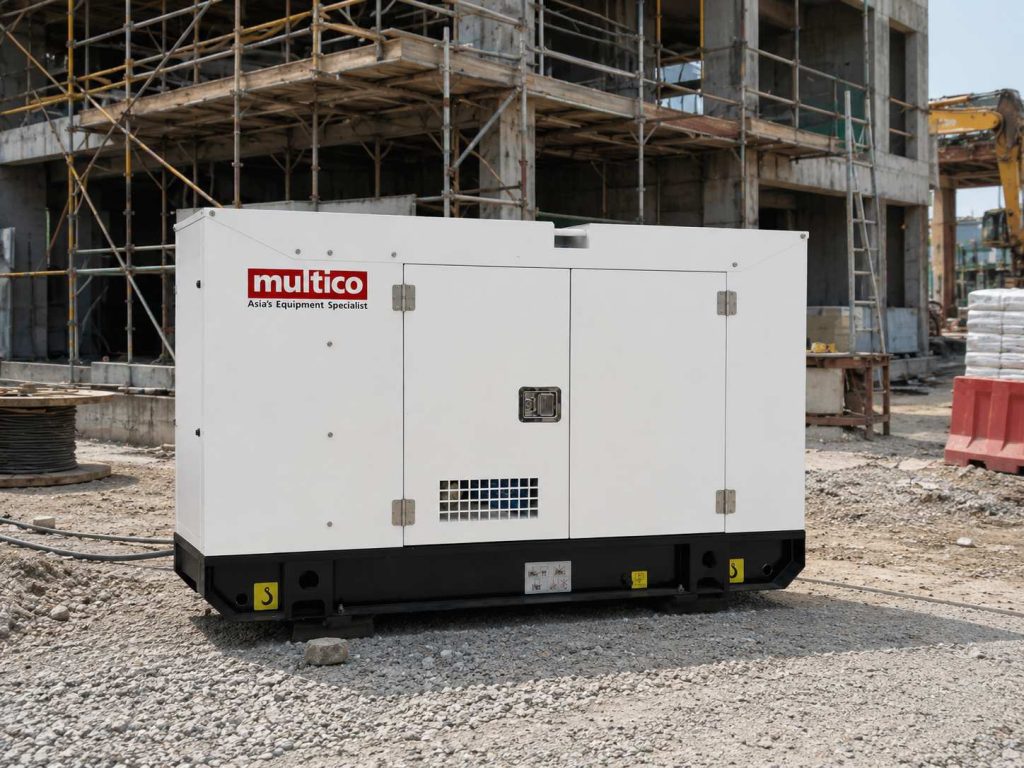
What to Look for When Buying a Generator Set for Construction Work
What to look for when buying a generator set for construction work?
- Power capacity (sizing and loads)
- Fuel type
- Power phase and installation
- Noise regulations and the environment
Overview
- Generators are essential long-term investments on construction sites, ensuring uninterrupted power that keeps projects running smoothly.
- This article explains what to look for when buying generator set equipment, helping procurement officers and project engineers make practical, cost-effective decisions.
- At Multico Prime Power, Inc. (MPPI), you can choose generator sets that deliver reliable performance, improve efficiency, and support continuous operations in demanding construction environments.
On a busy construction site, a generator serves as a critical power asset rather than just a backup source, ensuring continuous operations and preventing costly delays.
For project engineers and procurement officers, the priority is selecting equipment that can reliably support heavy workloads while maintaining efficient fuel consumption and manageable maintenance costs. This requires careful consideration of both current site demands and long-term operational performance.
Understanding what to look for when buying generator set equipment is therefore essential in making practical, efficient, and cost-effective procurement decisions.
Power Capacity (Sizing and Loads)
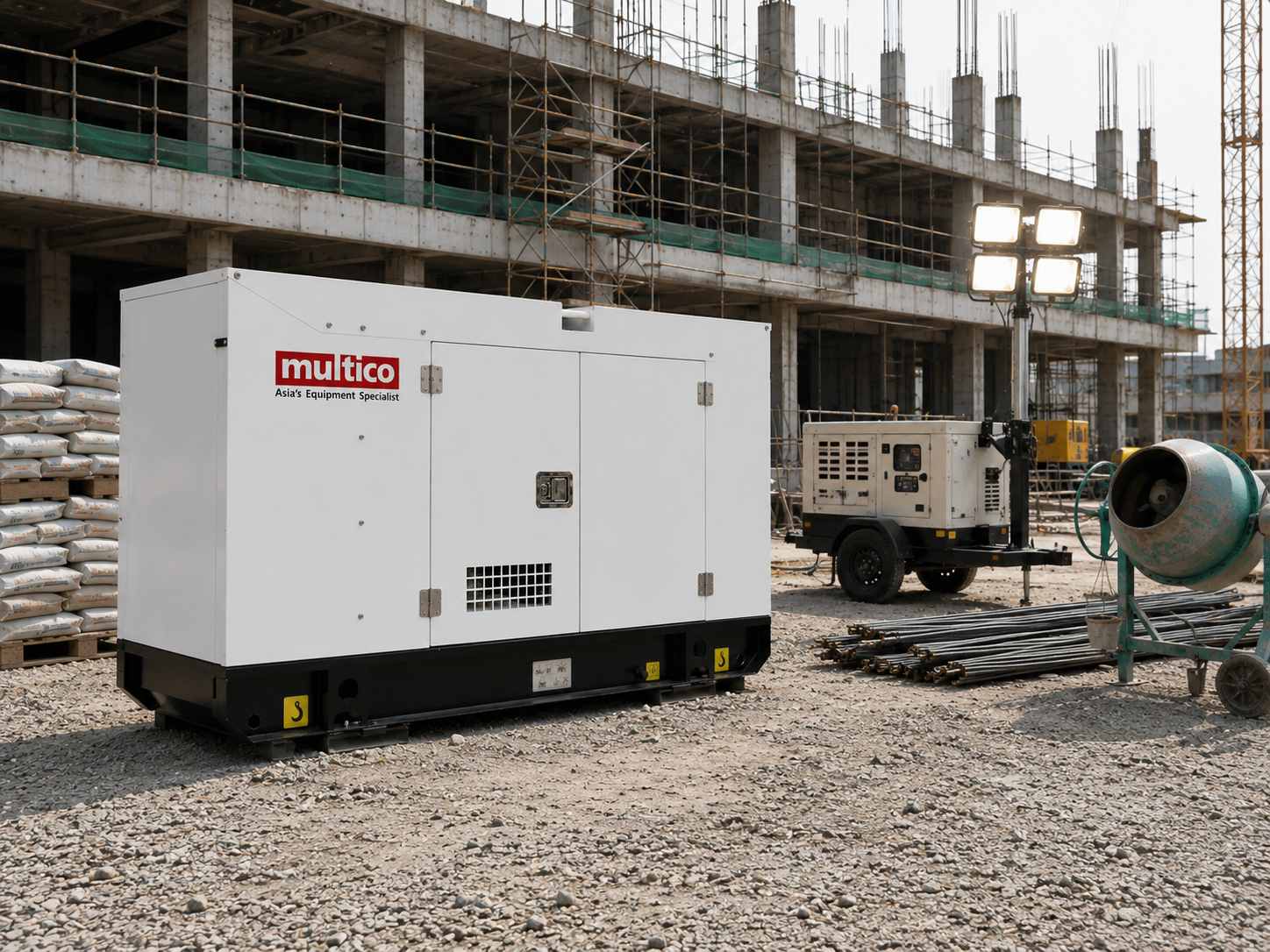
Generator performance depends heavily on how well its power capacity matches the equipment and systems it supports. Proper sizing requires evaluating both continuous operating loads and temporary peak demands across the site.
Here’s a simple sizing guide:
- Add together the running watts of all equipment that will be used simultaneously.
- Identify the machine with the highest startup or surge power requirement.
- Add that surge requirement to the total running watts to estimate the generator capacity needed.
- For generators rated in kVA, convert the value to usable kW using: kW=kVA×0.8
A properly sized generator helps prevent overloading, unstable power delivery, and unnecessary operating costs during construction operations.
Fuel Type
Different construction environments require different fuel solutions depending on operating hours, site accessibility, and equipment demand. Evaluating the fuel type helps ensure the generator can operate reliably under the project’s specific conditions.
A simple way to match fuel type with application includes:
- Diesel generators: Best for continuous and heavy-duty applications such as construction sites, commercial facilities, and long operating shifts.
- Gasoline generators: More suitable for portable, short-term, or light-duty use such as lighting systems, small tools, and temporary backup power.
- Inverter generators: Recommended for sensitive electronics, including laptops, AV systems, servers, and medical equipment, because they produce cleaner, more stable power output.
Power Phase and Installation
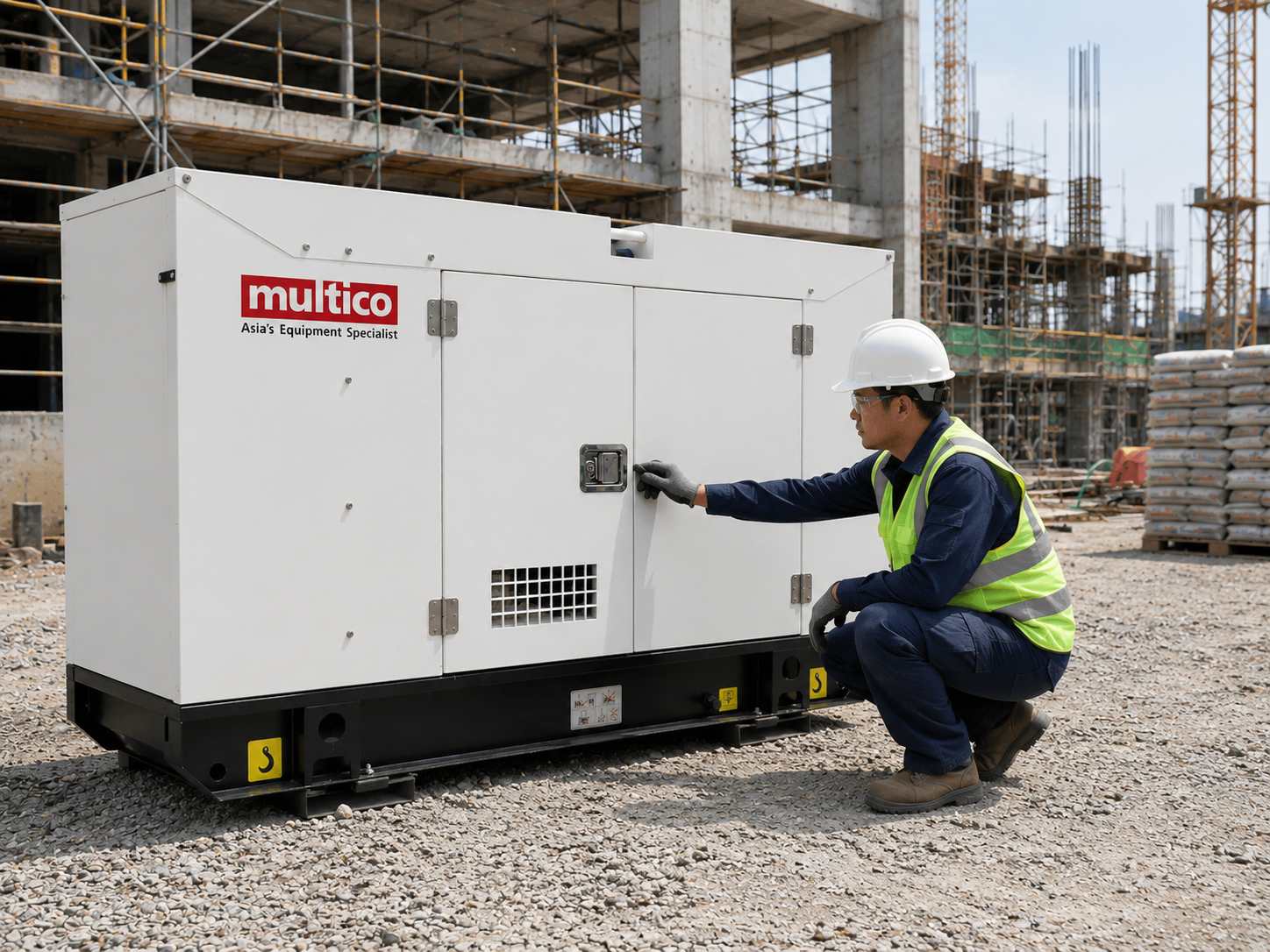
Power delivery on construction sites depends not only on generator capacity but also on how electricity is distributed throughout operations. Evaluating power phase and installation requirements helps ensure the generator can support connected equipment safely and efficiently.
For larger commercial operations and heavy industrial machinery, three-phase generators are often the preferred option. They deliver more stable power, operate more efficiently under heavy loads, and support higher power transmission requirements.
For standby use, an Automatic Transfer Switch (ATS) lets the system detect outages, start the generator automatically, and switch to backup power without manual intervention.
Additionally, assessing the cable routing, grounding, ventilation, and accessibility for maintenance and refueling is essential to ensure safe installation, reliable operation, and easier long-term maintenance.
Noise Regulations and Environment
In construction projects, unmanaged generator noise and emissions can contribute to operational disruption and workplace discomfort. This makes noise control and environmental awareness an important part of equipment planning.
Excessive noise can impair worker concentration, slow coordination in active zones, and even lead to compliance issues, depending on local regulations and project site requirements. At the same time, generators with higher emissions may also pose environmental concerns, especially in enclosed or densely populated areas.
With this in mind, it’s essential to consider noise ratings, proper enclosure systems, and appropriate site placement when selecting a generator set. These factors help reduce disruption, maintain a safer working environment, and ensure smoother day-to-day construction operations.
Partner with Multico for Dependable Construction Generator Sets
At Multico, we supply high-quality, high-performance generator sets trusted across construction and industrial applications in the Philippines. We focus on delivering reliable power solutions designed to meet both backup and continuous power requirements on-site.
Our standby generator sets can automatically activate during power interruptions, while our diesel generator sets feature advanced engine technology for lower emissions and long-term performance. So, whether you need automatic backup power or a primary power source for demanding site conditions, our generator solutions are designed to deliver reliable operations throughout your project.
Key Takeaway
Smart procurement decisions start with understanding what to look for when buying generator set equipment, especially when balancing power demands, fuel efficiency, and environmental considerations. These factors help ensure that the selected unit can deliver reliable performance with fewer disruptions and better long-term value on-site.
For dependable, high-performance solutions, trust Multico—your partner in reliable standby and diesel generator sets built for demanding construction environments in the Philippines.
To get expert guidance or request a quote, contact our team now for tailored support for your project needs.


