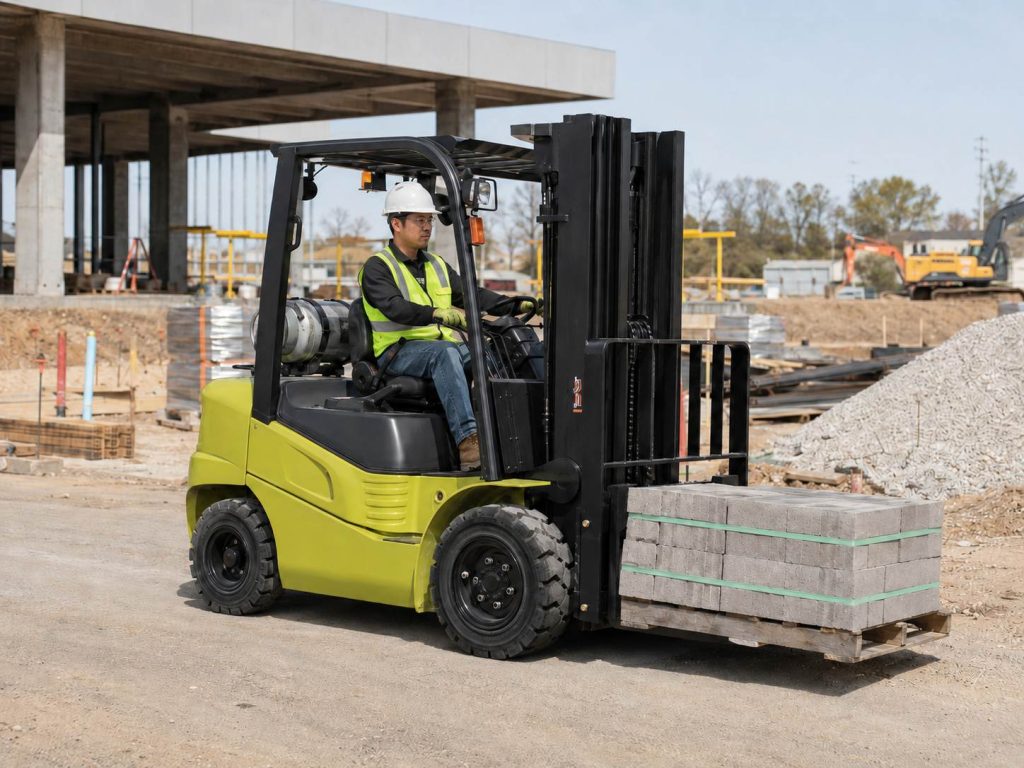
How to Evaluate Forklift Performance for Demanding Construction Environments
Overview
- Forklifts play a vital role in demanding construction environments where rough terrain, heavy lifting cycles, and continuous operation are the norm.
- This article explains how to evaluate forklift performance using practical, real-world criteria that go beyond specifications alone.
- Understanding these factors, project engineers can make more informed equipment decisions that support on-site productivity and long-term operational reliability.
In demanding construction environments, forklifts are routinely exposed to punishing rough terrains, grueling lifting cycles, and long hours of continuous operation. Given these harsh conditions, selecting equipment that maintains peak performance while safeguarding your site’s workflow is a critical operational decision.
Knowing exactly how to evaluate forklift performance before deployment serves as your strongest guide. By focusing on how a unit behaves under real-world working conditions, you can make well-informed decisions that protect your project timelines and your team on the ground.
Equipment Performance and Efficiency Metrics
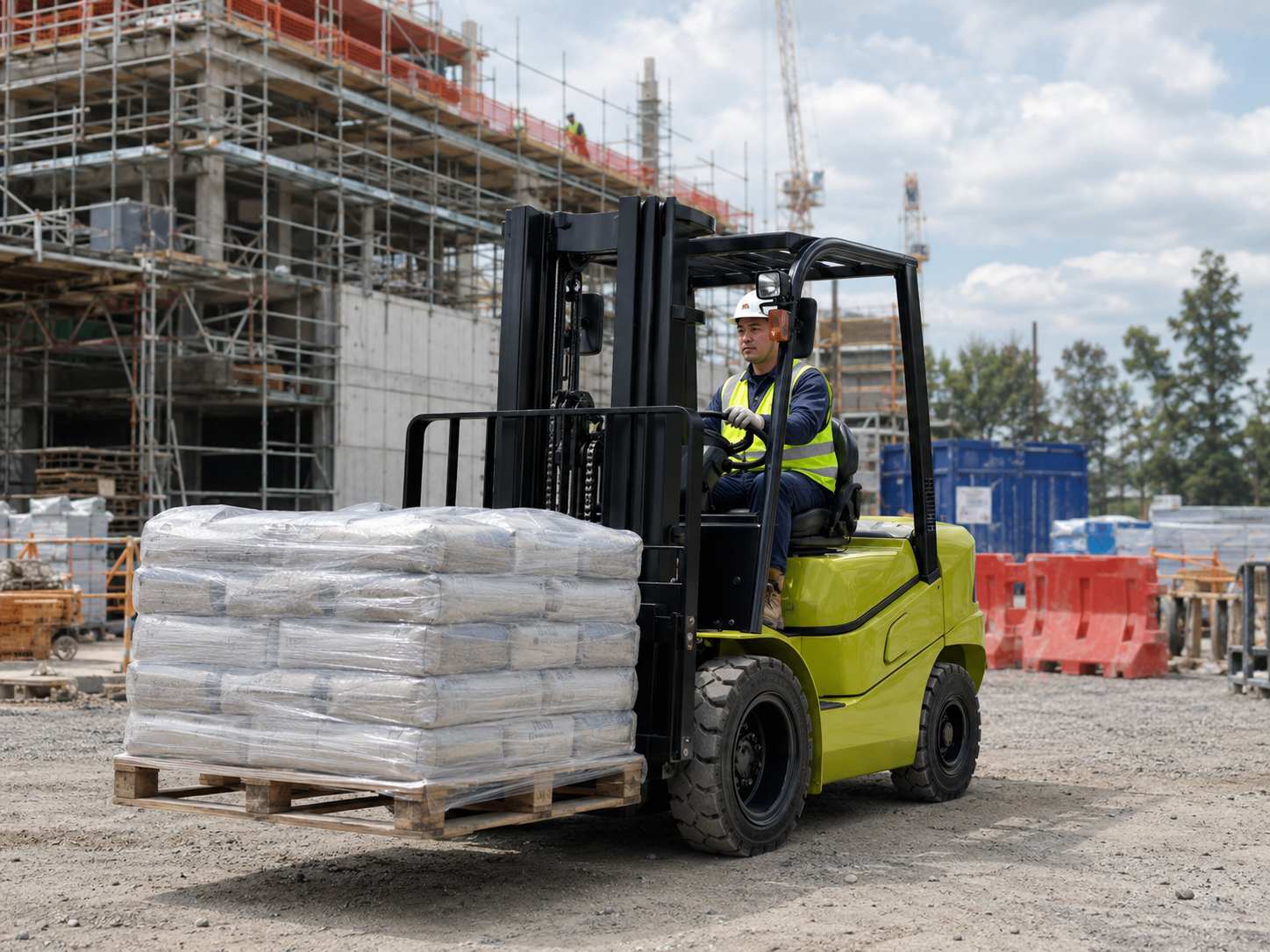
Evaluating forklift performance requires more than day-to-day observations on a construction site. A reliable assessment should be based on measurable indicators that reflect how the equipment performs under real operating conditions.
A practical evaluation framework may include key metrics such as workload output, fuel or energy efficiency, and maintenance frequency.
Operating Hours vs. Work Completed
The most meaningful measure of job site efficiency is always the volume of work completed per hour, such as the total number of pallets moved or the exact tonnage handled per shift. Two forklifts at the same construction site may log the exact same number of running hours. However, the machine that completes more material movements ultimately delivers greater operational efficiency and long-term value to your project.
Fuel/Energy Consumption
In demanding construction projects, equipment efficiency is measured not only by output but also by the energy required to sustain it. For internal combustion units like diesel or LPG forklifts, this means closely tracking fuel consumption rates against your daily hour-meter readings to catch inefficiencies early. For electric models, the focus shifts to monitoring battery charging frequency, total charge time, and actual runtime between cycles.
Maintenance and Repair Costs
A practical benchmark is to compare annual repair expenses and lost uptime against the unit’s book value and the cost of a new forklift. A machine is typically at the end of its economic life when maintenance costs rise, breakdowns become frequent, and it disrupts operations more than it supports them.
Practical Operator Evaluation
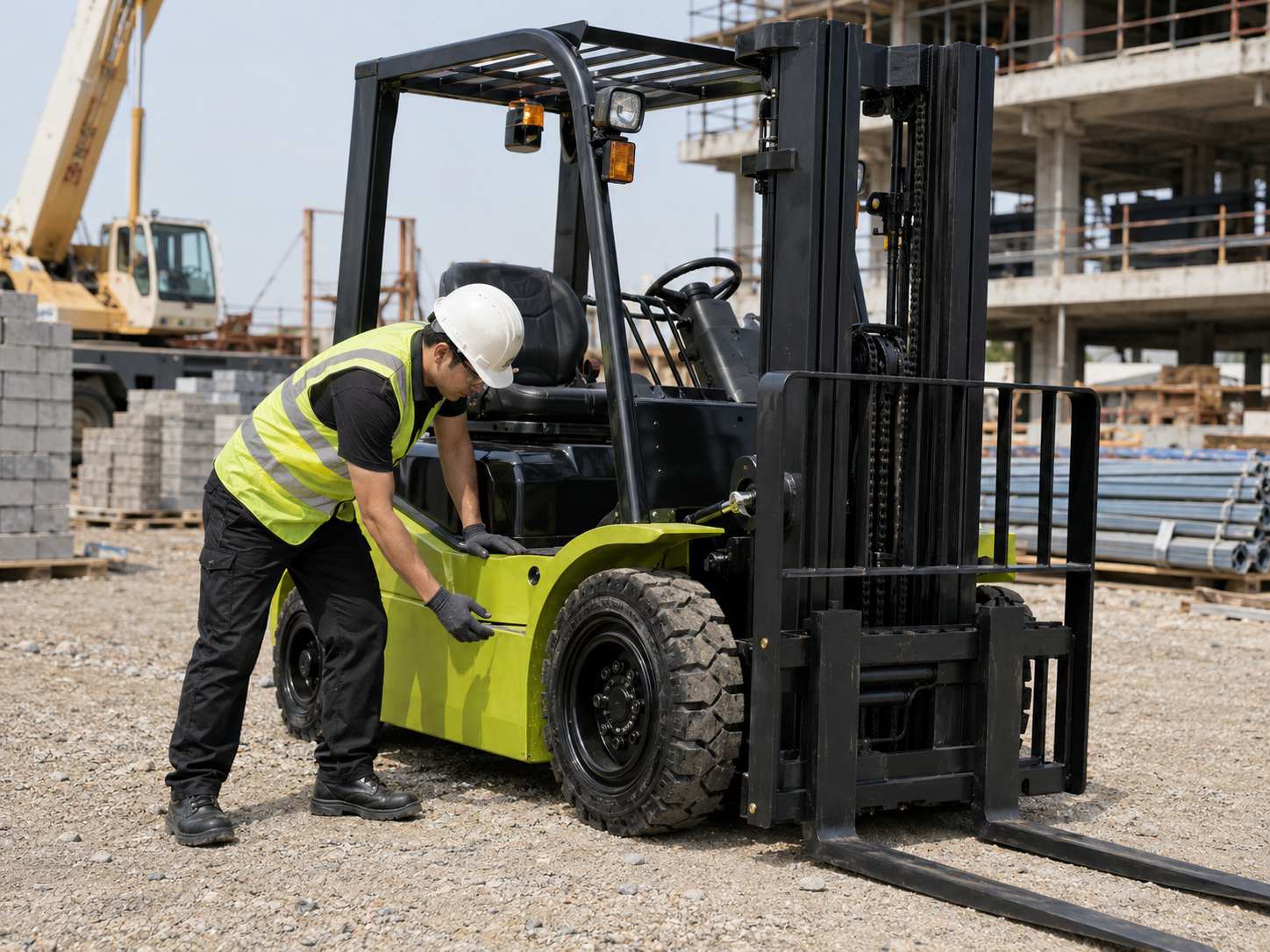
A forklift evaluation should also include the operator’s hands-on experience in actual working conditions. Practical assessment focuses on real-world handling, where usability, control, and responsiveness serve as key indicators of on-site performance. Ultimately, equipment value is reflected in how effectively it performs during demanding operational shifts.
Pre-Operation Checks
Begin each shift with a routine walk-around inspection before starting the forklift, checking for visible defects and ensuring all key systems are in safe working condition. This is followed by verifying essential components such as tires, forks, and hydraulic fluid levels or battery health. Doing this daily helps catch minor issues early and prevent unexpected downtime or costly repairs.
Load Handling
Observe whether the operator approaches the load squarely, centers it on the forks, and lifts smoothly without sudden movements. Safe handling also requires the load to be fully inserted, slightly tilted back for stability, and kept low during transport. A competent operator maintains this control throughout the entire movement, not just during pickup.
Maneuvering
Evaluating maneuvering focuses heavily on how smoothly and safely a forklift navigates your site, specifically during starts, stops, turns, and reverse travel. A skilled operator will consistently maintain controlled acceleration and progressive braking while executing steady, well-managed directional changes.
Safety Protocols
Ensuring your forklift operators follow standard safety procedures is the easiest way to give everyone on your construction site true peace of mind. A safe routine simply means double-checking that the seatbelt stays securely buckled whenever the machine is moving, and that the driver uses the horn to give a friendly heads-up before rolling past blind corners, doorways, or busy intersections.
Get the Right Forklift for Heavy-Duty Construction Work with Multico
Multico has over four decades of experience in delivering reliable heavy equipment solutions across the Philippines. As the exclusive distributor of Clark forklifts in the country, we represent one of the most established and trusted names in the industry.
Our range includes safe, high-quality material handling equipment designed for demanding applications. Clark forklifts are engineered for durability, operator safety, efficiency, and environmental performance, making them a dependable choice for modern construction and industrial operations.
Key Takeaway
Knowing how to evaluate forklift performance is essential for ensuring safety, efficiency, and long-term reliability in demanding construction environments.
For dependable heavy equipment solutions, trust Multico Prime Power, Inc., the exclusive distributor of Clark forklifts in the Philippines—built for durability, safety, and efficiency in modern construction work.
To learn more or get expert guidance, contact us now for tailored support with your equipment needs.


