Understanding the Importance of Material Handling
Overview
- Efficient operations depend on using the right material handling equipment for each task.
- Understanding equipment functions for transport, lifting, and storage helps reduce bottlenecks, improve safety, and boost productivity in warehouses and industrial facilities.
- Proper selection optimizes space, minimizes damage, and ensures smoother workflows and better overall operational performance.
Smooth operations depend on more than speed or manpower—they require the right equipment for the right task. When machinery is used without a clear understanding of its specific function, workflows become inefficient, productivity declines, and operational bottlenecks increase.
That is why understanding the function of machine handling equipment is essential for maintaining efficient movement, lifting, storage, and transport across industrial and warehouse environments. Matching operational demands with the correct equipment helps facilities improve coordination, safety, and daily performance.
In this article, we’ll break down the common types of material handling equipment and explain how selecting the right tool for each task supports smoother, more productive workflows.
Understanding the Importance of Material Handling
Material handling plays a critical role in keeping production, warehousing, and distribution operations running efficiently. Beyond simply moving goods from one location to another, it directly impacts productivity, safety, storage capacity, and inventory flow.
Effective material handling helps:
- Reduce workflow bottlenecks
- Minimize manual labor and physical strain
- Improve workplace safety
- Protect products from damage
- Optimize storage and distribution processes
Without the right systems in place, even well-staffed facilities can experience delays, inefficiencies, and unnecessary operational costs.
Key Functions by Material Handling Equipment Type
Each type of material handling equipment is engineered for specific operational requirements, whether for transport, lifting, positioning, or storage.
Transportation
Transportation equipment is designed to move materials horizontally throughout facilities while reducing worker strain and improving movement efficiency.
- Conveyors: Automated systems that continuously move products using belts, rollers, or chains, making them ideal for assembly lines and high-volume distribution.
- Carts and Trolleys: Manual or semi-powered solutions for transporting lighter or varied loads through tighter spaces where larger equipment may be impractical.
Lifting and Positioning
Lifting equipment is designed to handle vertical movement, heavy loads, and precise placement of materials, especially in environments where safety and accuracy are critical. These tools help reduce manual lifting, prevent damage to goods, and improve overall workflow efficiency in warehouses and industrial facilities.
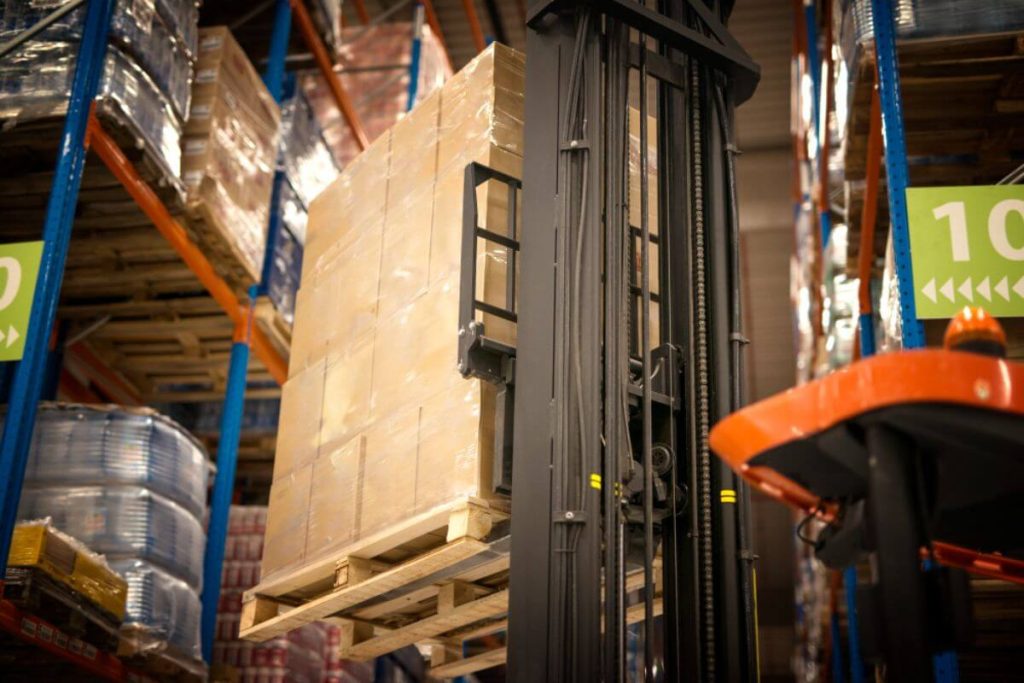
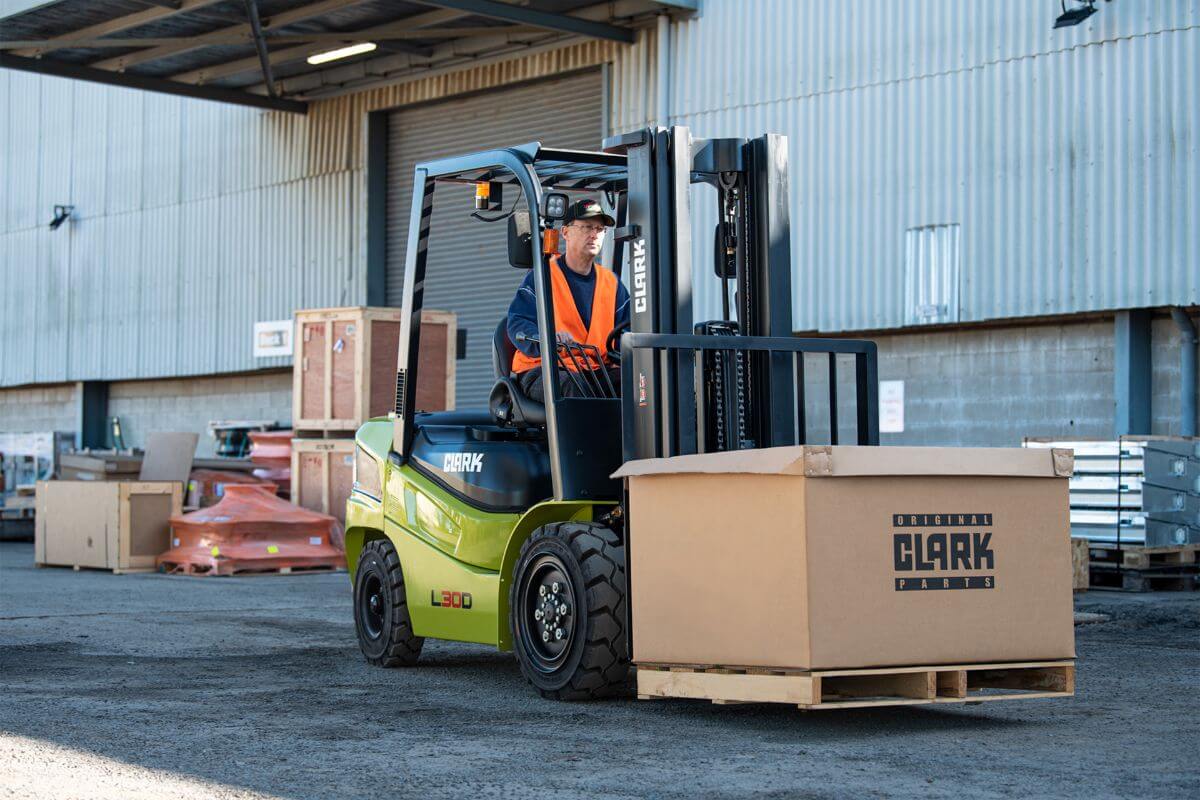
- Forklifts: Essential warehouse machinery used for lifting, transporting, and stacking heavy pallets at various heights. For example, in a distribution center, forklifts are commonly used to unload palletized goods from delivery trucks and place them into high-racking systems for storage.
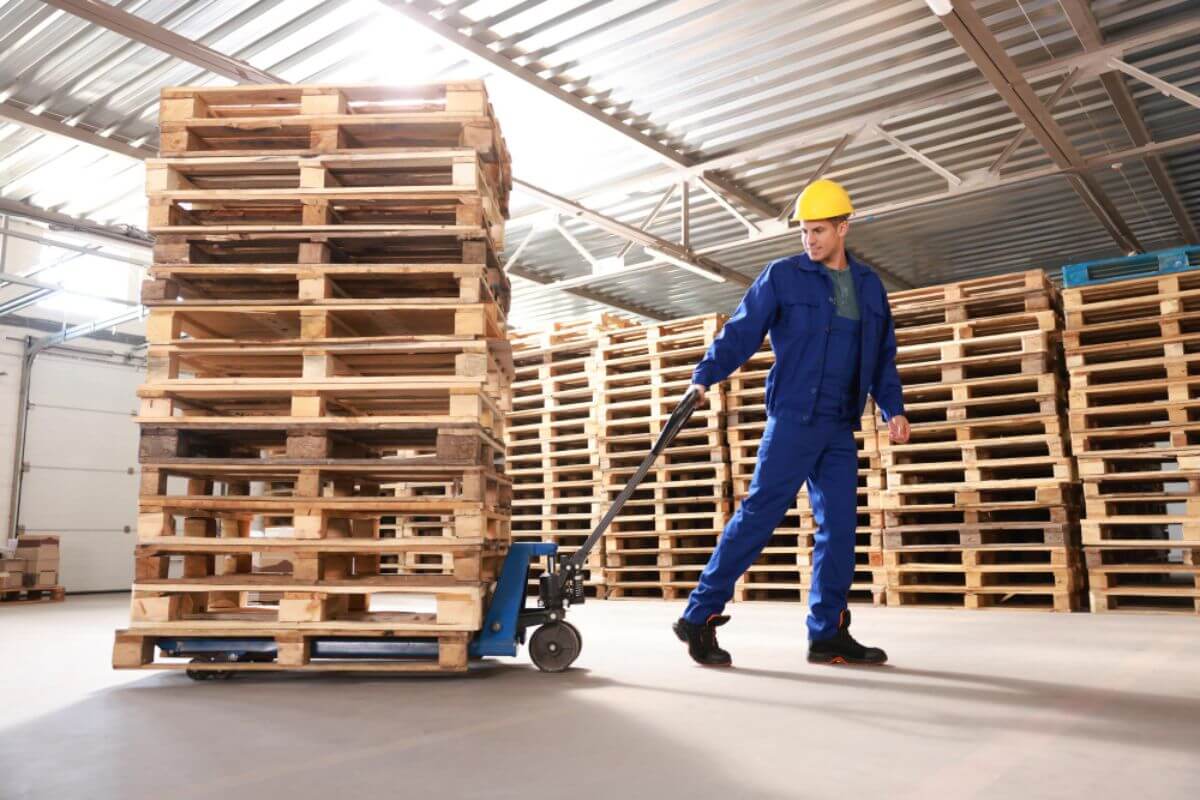
- Hand Pallet Trucks: Compact tools designed for short-distance pallet movement, ideal for confined spaces such as loading bays or narrow warehouse aisles. They are often used when moving goods from storage areas to packing stations.
- Cranes and Hoists: Heavy-duty systems used for oversized or industrial materials requiring vertical lifting and precise handling. For example, in manufacturing plants, overhead cranes are used to lift steel components or large machinery parts that cannot be handled by forklifts.
Storage and Retrieval
Storage equipment is designed to maximize vertical space while keeping inventory organized, accessible, and protected. Well-implemented storage systems reduce clutter, improve inventory visibility, and make retrieval faster and more efficient, supporting smoother warehouse operations overall.
- Racks and Shelving: Racking systems are used for high-density vertical storage of bulk goods, while shelving is ideal for organizing smaller items that require easy access and frequent handling. For instance, in a retail warehouse, pallet racks store large volumes of boxed products, while shelving units are used to organize smaller items like accessories or spare parts, allowing faster picking and restocking.
- Mezzanines: Mezzanine floors create additional usable space within the same facility footprint, effectively expanding storage or operational capacity without building expansion. A distribution center may use a mezzanine level for packing and order preparation while bulk inventory remains stored at ground level, improving workflow efficiency by separating storage from processing activities.
Key Benefits of Knowing and Using the Right Tool for the Job
Selecting the right material handling equipment helps transform inefficient storage areas into well-organized, high-flow operational spaces. By using the right tools for specific tasks, facilities can reduce manual strain while making better use of available space and resources.
- Increased safety: Proper equipment significantly reduces manual lifting and repetitive strain, lowering the risk of workplace injuries and creating a safer, more controlled working environment.
- Improved efficiency: Purpose-built and automated tools accelerate material movement, reduce downtime, and support faster, more consistent operational output.
- Cost savings: Minimizing product damage, labor inefficiencies, and operational delays helps reduce long-term expenses and improves overall cost control.
- Space optimization: Smart storage systems and compact handling equipment maximize vertical and floor space, allowing facilities to store more inventory without expanding physical footprint.
Key Takeaway
Understanding the function of machine handling equipment is essential for creating safer, faster, and more efficient workflows. When each machine is matched to its intended role, facilities can improve productivity while reducing operational strain.
For businesses that depend on reliable material transport and lifting solutions, Multico Prime Power offers durable forklift systems built for demanding warehouse and industrial applications. Contact us today to optimize your workflow and improve operational performance.


